Saturday, 28 November 2009

Quote of the week(!)

...About a horse owned by one of our students. It has superb feet and has just passed a 5 stage vetting but the vet's comments about it were priceless :-)

"He puts his feet down heel first, which laminitics often do, but as there is no sign of laminitis it must just be the way he moves".

Well done to him, I suppose for spotting how the hoof landed, but surely it should be a toe first landing which is a red flag in a vetting (as with the horse I blogged about here) , not a heel first landing?!

He then went on to say to the prospective owner:

"He won't need shoeing unless he's going to do a lot of roadwork".

Now in some ways its amusing, but really this vet had no excuse - he is in an area where he will have come into contact with a number of excellent UKNHCP practitioners, including at least one farrier; the horse was on a yard where all the horses are barefoot and working hard; the vet's own practice has at least one client who has evented barefoot horses for several years.

Fortunately there is a fairly concerted education campaign going on up there, but you can only educate people who are willing to learn...


Friday, 27 November 2009

Mild frustration...

As you can see from the mileage totals, its been impossible to get Angel out hunting for a couple of weeks. Its a shame because he was doing well, and would have benefitted from lots of short trips out, rather than only going once a fortnight...

I've been foiled partly because the weather has been atrocious - the last time I was aiming for Angel to have an outing the meet was on the most exposed area of the moor, the wind was gusting at 60mph and it was hailing. The moor was saturated and it simply wouldn't have been fair on him. On top of that, I've been busy, and its been a struggle to get out at all, and Andy and Bailey have been unavailable for nannying duties - so thoughtless (!).

However, I really am hoping to get him out a good few times between now and Christmas - he's so nearly at the stage when he has "got" it...

PS: Now REALLY frustrated...weather forecast that I heard this morning: "Dry and sunny in most areas, scattered showers in the south west". WHAT?!?!?!?! Its been hailing here since 5.30am, an absolutely continuous downpour, now nearly 11am and no signs of stopping...

Thursday, 26 November 2009

Horses hate hail...


...especially when its blown in by wind gusting at 50 mph so it really, really stings when it hits you...

...Hector's face says it all, really - can there be any doubt that he was out exercising under protest...?! If anyone is moving to Spain or the south of France and wants to take a horse with them, Hex is volunteering...

Personally, I am putting in a formal request for at least a day or so of dry weather...

Wednesday, 25 November 2009

Effect of wedges

The subject of wedged shoes came up a few days ago. Its a form of remedial shoeing which is a relatively common means of trying to take pressure off the deep digital flexor tendon, so its often suggested for "navicular" horses and horses with DDFT injuries.

These shoes have the effect of raising the horse's heels which mechanically makes sense - in a static horse, raising the heels shortens the DDFT. There is an extreme example shown here.

Once moving, the effect of wedged heels is that the horse is effectively walking "uphill" at every step - and if you watch any normal horse walking on a slope, going uphill will make it land more toe first and going down hill will make it land more heel first.

Of course, horses with DDFT/navicular pathology always prefer to walk up hill than down hill, because the back of the hoof is the area which is painful for them.

So on the face of it, wedged shoes are a good idea because they allow the horse to walk toe first all the time...Except that we know that a toe first landing causes undue strain on soft tissue over time, including on the DDFT itself.

There is also the huge problem that landing toe first does not allow the horse any real ability to shock absorb, as there is simply nothing which can fulfil this function in the toe, so every stride on hard ground will jar the limb.

A wedged heel is therefore a way of alleviating caudal pain for the short term, but it doesn't provide a solution. In fact, as these types of shoes don't allow the DDFT to fully extend, they can be problematic if used for too long.

Interestingly, Denoix and Pailloux recommend stretching the DDFT as an important part of rehabilitation, and this involves lowering the heel, and raising the toe to fully extend the DDFT.

Tuesday, 24 November 2009

Hoof changes...

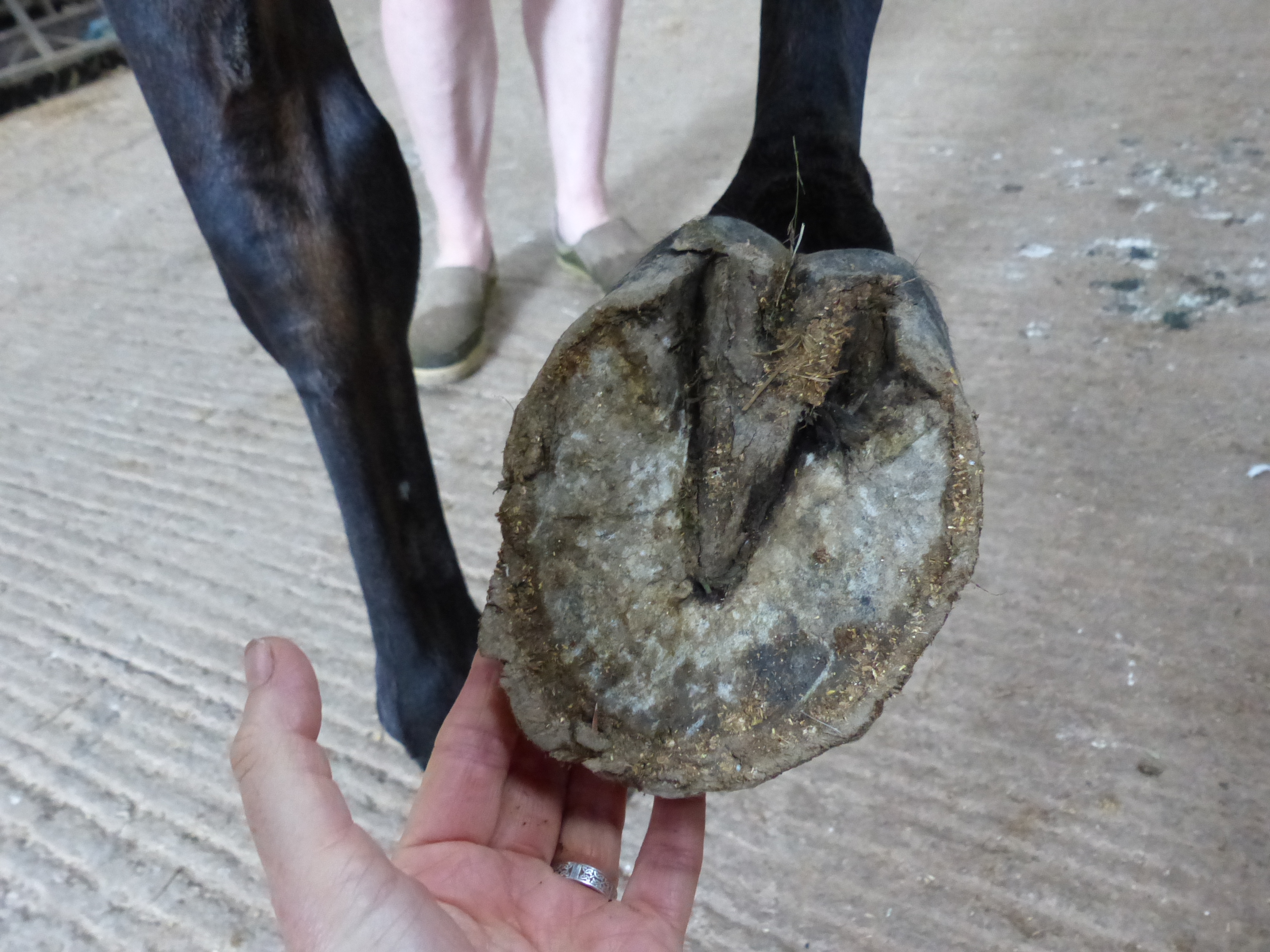
Sole in November 09
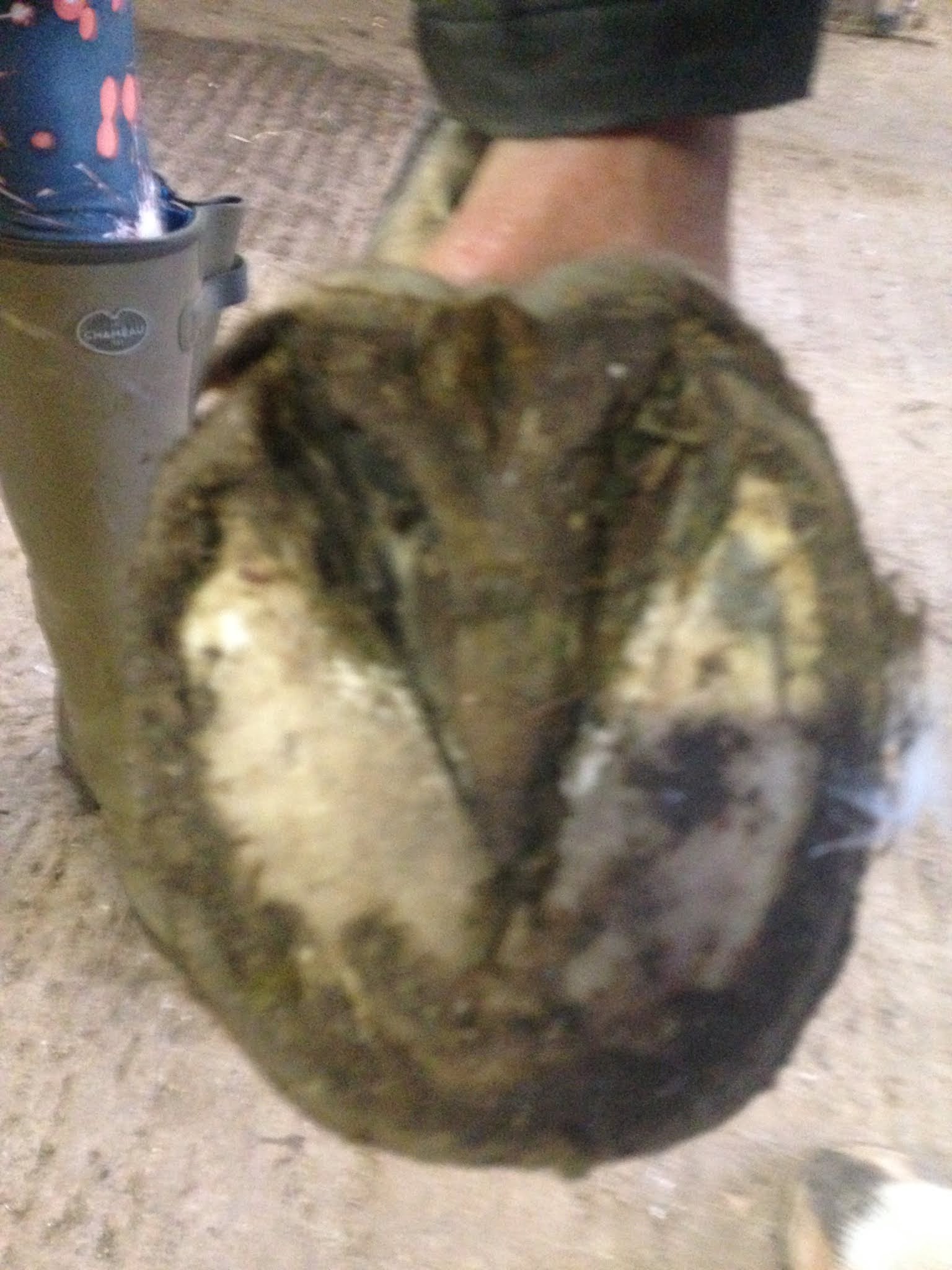
Sole in June 09
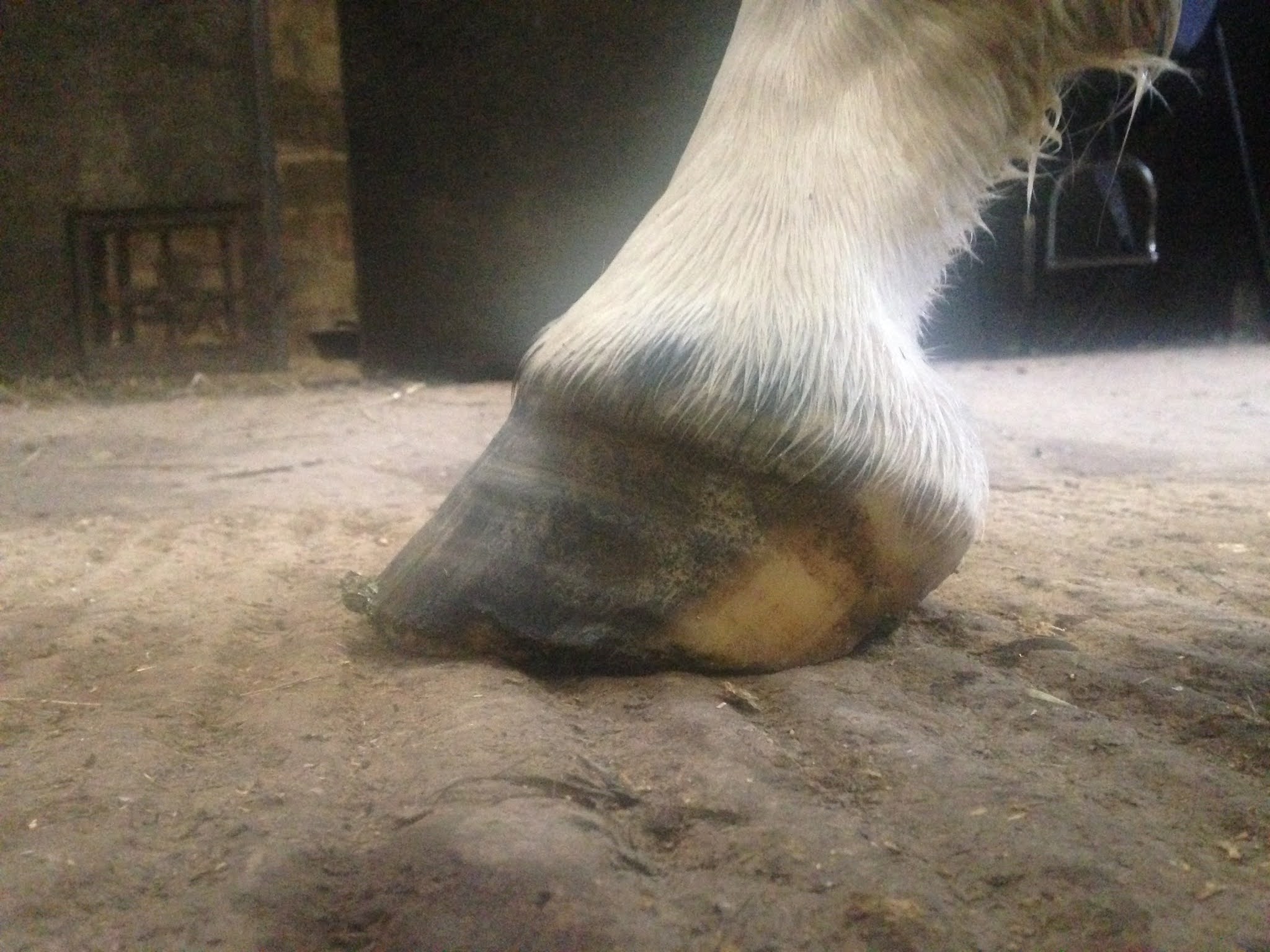
Hoof in November 09
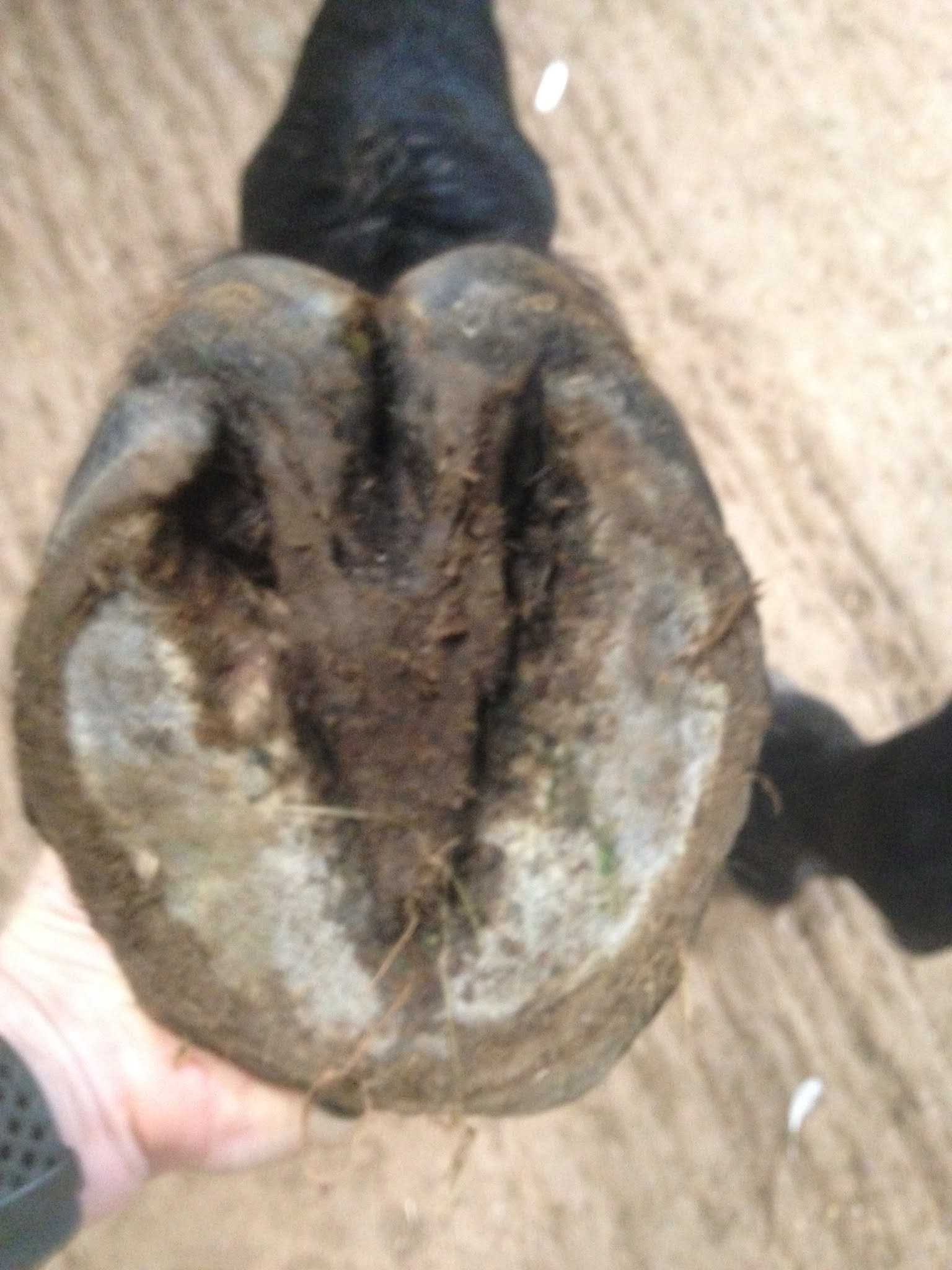
Hoof in June 09

Here are some fun photos, taken of a lovely young horse who came out of shoes in June. The June photos show of her hoof that day, and by contrast the others show the same horse in November.

Photos like these are interesting because they show how even good hooves on sound horses can sometimes improve, both in biomechanics and in hoof quality. This horse had been well shod, but even so you can see how long her toe was becoming in shoes, and that her heels would probably have under-run if she had stayed shod.

As a bonus, both her owner and I also think her movement is straighter and stronger than it used to be :-)

Monday, 23 November 2009

Lovely review!

I was sending someone the link for "Feet first" and saw there are some new reviews of it on Amazon. The latest review had only one star, so I was sure I was going to find someone who was less than impressed by it, but the comments were lovely. The writer talked about rehab for their own horse, and said:

"Before we take her shoes off we are going to lend the book to our farrier, sure that he will not find his life's work criticised...It is an encouraging and pleasant book to read. Essential for anyone considering life without iron shoes."

This is just what we were hoping to achieve in writing the book - thrilled to think we have made a difference :-)

Slightly worried to find that someone else has said:

"I eagerly await the arrival of "More Feet First""

:-0 !!!!!!!

Friday, 20 November 2009

Studs and slipping

A question that came up several times at YHL was whether horses need studs to jump. One person told us that she shod her horse part way through the eventing season last year because it was slipping more barefoot than it did in shoes.

The problem for all of us on the stand was that we have never found it problematic to jump horses XC without studs. In fact the general feeling among UKNHCP practitioners and clients is that horses slip less barefoot than in shoes, or at least have fewer problems with slipping, which may not be quite the same thing.

As Mark Johnson described several times over the weekend to interested visitors, the horse's limb needs to be able to slip slightly when it is subject to turning forces, otherwise additional stress is transferred onto ligaments and tendons. Obviously a severe slip, though, can result in a wrench or sprain (as Felix found out on Tuesday, I assume...).

There is no doubt that some riders feel more secure with studs in, but its hard to be sure how much this is a "placebo" effect. A rider of shod horses at one of Mary Bromiley's clinics agreed with Mary, that studs may not be as indispensible as they are supposed to be. She described when she thought she was riding her horse with studs screwed in. She didn't notice any loss of performance (believing the studs were doing their job) and it was only when she came to take them out that she realised she had done an entire intermediate event without them.

We will probably never know how much of the concern about barefoot horses not being able to use studs stems primarily from rider worry.

As for slipping, obviously this week isn't a great time for me to post thoughts about slippingafter Felix, normally surefooted barefoot horse extraordinaire, apparently came a cropper in the field(!). Nevertheless, all horses can slip from time to time, particularly on a steep wet field, whether shod or barefoot - a few weeks ago a shod horse came right down out hunting on a very tight turn on wet grass.

My own view is that the horse's own sense of balance is hugely important, and that as they develop both balance and proprioception, the problems of slipping are reduced.